A template is not a bad product, and some jobs should use one. Let us say that plainly before saying how we differ, because an article claiming templates are always bad usually comes from someone who sells design.
What we want to show is that the difference is not price or looks. It is the starting point, and its effects can be checked in ten minutes without taking anyone’s word, ours included.
When a template is the right call
A template fits when your content already suits a shape that exists: a campaign page that lives for two weeks, a restaurant that needs a menu, opening hours and a map, or an idea that has to meet the market before anyone invests in it. Those jobs are quick and cheap, and designing from scratch would be more than they need.
Trouble starts when the site has to work for the business for years, or when what you sell is not a standard shape.
The difference is the starting point
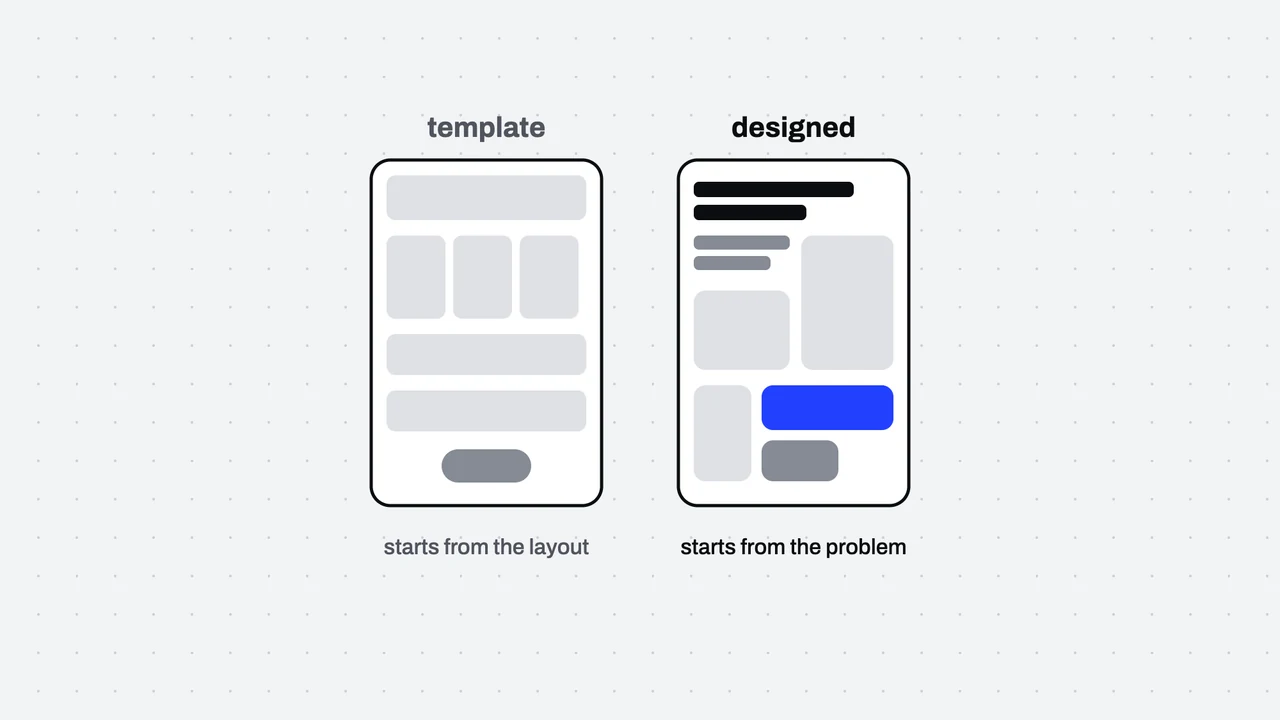
A template starts from a finished page. You pour your content into its slots. If the text is longer than the slot, it gets cut. If there are three review slots and you have two reviews, you go looking for a third.
A designed site starts from the business problem: who arrives, and what they must be able to do. The shape of the page follows from that. The slots fit the content, not the content the slots.
Six checks you can run in ten minutes
Run them on anyone’s site, ours included, and on the others you are comparing.
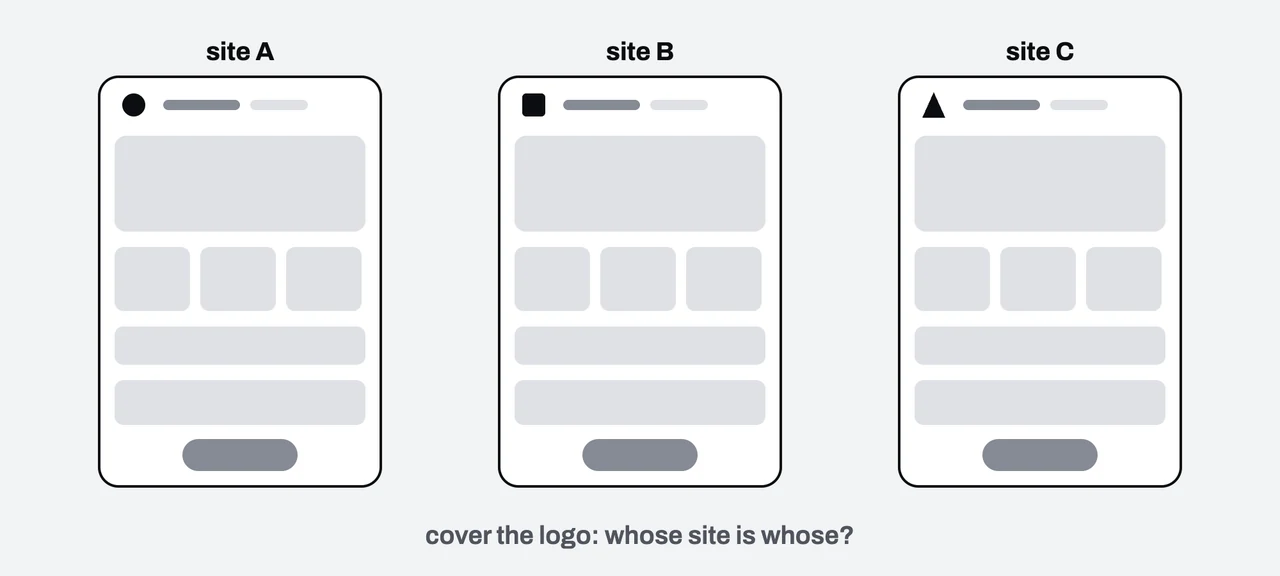
Cover the logo and guess. Put a finger over the logo and see whether you can still tell whose site it is. If the order is the same as everywhere else, a big image, three cards, reviews, pricing and a sign-up button, the page came from the same mould as many others.
Narrow the window. Drag the browser edge to phone width and see where the Thai text breaks. If a headline breaks in the middle of a phrase, or leaves one lonely word on the last line, nobody has typeset it.
Press Tab, one key at a time. Does the focus ring follow the order your eyes read in, and is it obvious which button you are on? How well someone using a keyboard or a screen reader can use the site depends on this.
Look at the heading structure. Choose View Page Source and search for h1. There should be one, and the subheadings should follow the content, rather than just being text made large. Search engines and AI read a site by this structure.
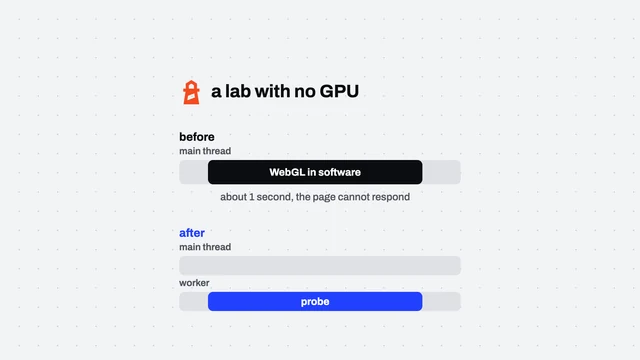
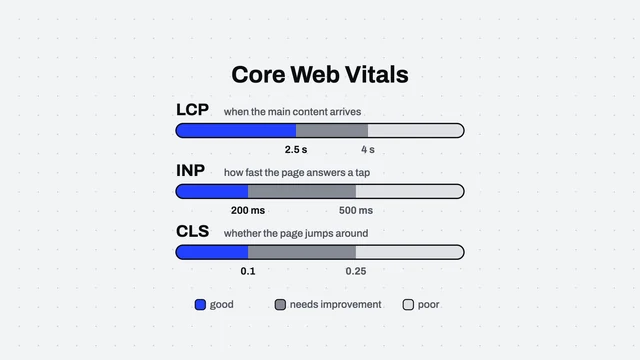
Run Lighthouse three times, in Chrome DevTools or PageSpeed Insights. See which element is the LCP and how far the score moves between runs. One run tells you nothing.
Ask whether you can leave. If you ever want to change provider, what do you take with you: the code of the site, or only the content you must build again? A site written in real code can be hosted anywhere. A site inside a closed platform can often only move its text and pictures.
What a template often cannot do
Not every template, but when you hit a limit it is usually one of these three.
A part the template never imagined. A comparison table your process needs becomes a matter of bending an existing slot to do a job it was not designed for.
Thai type: breaking lines at phrases, and the line height that vowels and tone marks need, are often set up for English.
Two languages: a separate address per language, switching language without losing the page you are on, and text that runs to different lengths in each language all have to be planned from the start, not added later.
What we do
We start from the business problem and design your brand’s own system, from colour and type to motion. Then we write it as real code with Claude Code and Codex, every line reviewed by a person, and the site is yours, with no platform lock-in. See the work; answers on price, time and revision rounds are in the FAQ.
If you already have a site and want to know how it does on these six, tell us your brief. But whoever you choose, do not take the explanation on trust. Check it yourself.